
Permits & Code
Do You Need a Permit to Replace a Roof in Fort Worth? The City's Rules for a Residential Reroof
Fort Worth draws the permit line at the decking: shingles alone need no permit, replacing any decking does. Here is the City's own answer, the code behind it, and what to settle before the tear-off starts.
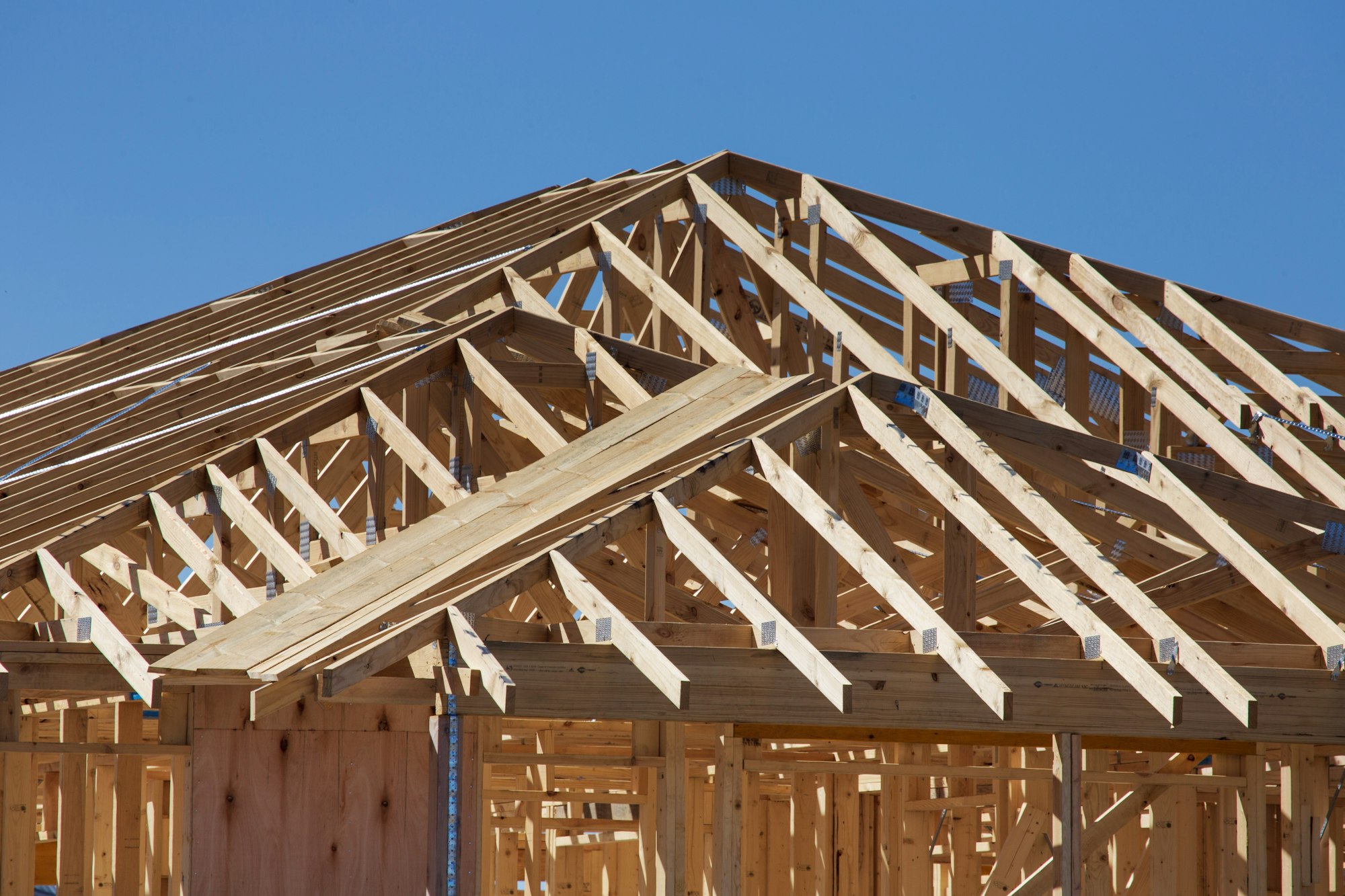
Replacing only the shingles on a single- or two-family home in Fort Worth does not require a permit. The City of Fort Worth Development Services department answers it plainly in its residential re-roofing FAQ: asked whether a permit is required to replace only shingles with no decking replaced, the answer is "No." Asked whether a permit is required if any decking is replaced, the answer is "Yes." That one distinction is the entire rule, and it is why two houses on the same block can have their roofs torn off in the same week with only one of them showing up in the permit system.
The complication is that almost nobody knows which of those two jobs they have until the old shingles are off and the deck is exposed. A roof that reads as sound from the driveway can hide soft plywood around a chimney, a bathroom vent or a valley, and the moment one sheet has to come off, the job changes category. Homeowners who understand that before the tear-off starts are much harder to surprise, both on the permit and on the final invoice. What follows is the City's own answer, the code behind it, and the details that apply to every reroof in town whether a permit is pulled or not.
Shingles Only, No Permit. Any Decking, Permit Required.
The permit question has a two-line answer in Fort Worth, and the City publishes both lines. A straight shingle swap on a single- or two-family dwelling, with no decking replaced, needs no permit. Replace any decking and a permit is required. There is no square-footage threshold underneath that, and no distinction between a repair on one slope and a full roof replacement across the house.
In practice the contractor pulls the permit, not the homeowner, and that is worth settling in writing before the crew arrives rather than mid-tear-off. A reputable estimate will already carry a line for decking replacement priced per sheet, because every roofer in Tarrant County knows some percentage of decks come up bad. Ask the question at the estimate stage, get the answer in the contract, and the permit stops being a surprise.
Why the Decking Line Is the One That Decides It
Decking is the permit trigger because replacing it is structural work, while replacing shingles is a covering change. The City's FAQ is specific about what that means on a real roof. Sound sheathing stays: as the FAQ puts it, "As long as the sheathing is in good condition it doesn't need to be replaced." Older thin decking is not automatically condemned either. Three-eighths-inch plywood or OSB is still allowed over rafters 24 inches on center where the span rating is 24/0, under "Table R503.2.1.1(1) of the 2021 IRC."
Two limits matter more than homeowners expect. First, you cannot paper over a bad deck with a new one, because "The code does not allow a layer of decking to be installed over an existing layer." If the deck is failing, the failing sheets come out. Second, where 100 percent of the panels are replaced, the installer uses either H-clips or the panel spacing the sheathing manufacturer calls for, typically a quarter inch. None of this is visible once the shingles are back on, which is the argument for having a roof inspection document the deck while it is open, especially if you have been chasing a roof leak that nobody has traced.
Which Code Fort Worth Actually Enforces
Fort Worth enforces the adopted International Codes, with local amendments layered on top. The City states it directly: "Yes the City enforces the adopted International Codes." For a house, the governing document is the International Residential Code, which the International Code Council describes as a "comprehensive, stand-alone residential code" covering "the design and construction of one- and two-family dwellings" and townhouses not more than three stories above grade.
The part that applies to your roof is narrower than the whole book. Asked which chapter of the 2021 International Residential Code applies to roof assemblies, the City answers "Chapter 9." That is the chapter a plans examiner or inspector will be working from, and it is the reason a roofer quoting your house should be able to answer questions about underlayment, flashing and deck fastening without reaching for a brochure. It also applies to assemblies other than asphalt shingles, so a homeowner weighing metal roofing is still inside the same chapter, with the product's own installation instructions sitting alongside it.
The Code Details That Apply Even Without a Permit
Not Sure What Your Decking Will Look Like?
A deck only shows itself once the shingles are off. We can look at the roof first and tell you what to expect before you sign anything.
Schedule a roof inspection - (682) 399-8789A reroof that needs no permit still has to meet code, and several requirements catch people out. Underlayment is the first. The City's position is that "Either the manufacturer recommendations or the requirements of section R905 of the 2021 IRC must be met," and where the two differ, "whichever is more restrictive" governs. That is a real distinction on a cheap bid: a crew following only the minimum in one document while the shingle manufacturer asks for more has a problem, and so does the warranty.
Three more items are worth knowing by name before you read an estimate:
- Ice barrier underlayment is not required in Fort Worth under the City's amendments, because "there is not a history of ice damming in our area." A bid that charges you for one is selling a northern-climate product.
- Crickets are required when re-roofing if none exist. That is the small diverting saddle on the uphill side of a chimney, and its absence is a common source of chronic leaks.
- Drip edges are required when re-roofing if none exist, which also changes how water leaves the roof and lands in your gutters and downspouts.
Who Pulls the Permit, and Why Licensing Will Not Vet Your Roofer
The contractor doing the work files the permit through the City, not the homeowner. Fort Worth takes permit applications through its online permitting portal, Accela Citizen Access, and its Development Services team also handles contractor registration for building, electrical, mechanical, parkway, plumbing and sign erector work, as the City's Development Services permits page describes. The City also warns on that page that scam emails circulate asking for payment on fake invoices, and that fees should be verified inside your own Accela account.
Here is the part Texas homeowners consistently get wrong: there is no state roofing license to check. The Texas Department of Licensing and Regulation lists the industries it regulates, and roofing is not among them. Air conditioning contractors, electricians, elevator safety and water well drillers all appear on that list. Roofers do not. So "licensed" in a roofing ad does not mean what it means for an electrician, and vetting falls back on insurance, references, a written scope and a company that answers the phone a year later. If you want someone to walk the specifics of your roof before you sign anything, ask us directly.
Inside Fort Worth, and Everywhere Else in Tarrant County
These rules are Fort Worth's, and they stop at the city limits. The decking trigger, the Chapter 9 reference and the Accela filing process apply to a house inside Fort Worth. A house in Keller, North Richland Hills, Arlington, Benbrook, Saginaw, Haltom City or Crowley is permitted by that city, under its own adopted codes and amendments, and the answers are usually similar but not identical. Weatherford sits in Parker County entirely. The practical move is to confirm with the city that actually issues the permit, not with the one whose name is on the nearest freeway sign.
Geography matters for a second reason. Roofs along the I-35W and Alliance corridor, through Wedgwood and the Camp Bowie area, and east toward Hurst, Bedford and Euless all sit in the same hail and wind belt, so the reroof that raises the permit question often starts as storm work. If that is your situation, the sequence runs through storm and hail damage repair and often an insurance claim first; our walkthrough on filing a roof insurance claim for hail damage in Texas covers that order. The full list of cities we cover is on the service areas page.
Settle the Decking Question Before the Tear-Off
Start by asking your roofer two questions in writing: what happens if decking is found bad, and who files the permit if it is. Those two answers remove most of the uncertainty, because everything else about a Fort Worth reroof is already fixed by the code and published by the City. Get the per-sheet decking price in the estimate so a bad deck is a known cost rather than a renegotiation on day two. Expect crickets and drip edge if your roof lacks them, and do not pay for an ice barrier. If you would rather have someone look before you commit, Fort Worth Roofing Texas can walk the roof and tell you what the deck is likely to show, alongside straightforward roof repair options if a full reroof is not yet the answer.
Find Out What Your Roof Deck Is Hiding
Tell us what you are seeing on the roof and which city you are in, and we will tell you whether a permit is likely and what the job actually involves.
(682) 399-8789Call Fort Worth Roofing Texas - (682) 399-8789